
Groundworks and finishing
Dropped kerb applications
A dropped kerb, or vehicle crossover, is a lowered section of kerb and strengthened pavement that lets a car cross the footway to reach a driveway. It needs consent from the highway authority (your council in England, Wales and Scotland; DfI Roads in Northern Ireland), and the work in the pavement is done by that authority or a contractor it approves.
- Guide price
- about £1,000–£2,500 per crossing, set by the highway authority
- Time on site
- Approval often takes several weeks; the works themselves are quick
- Permeable
- Depends on build
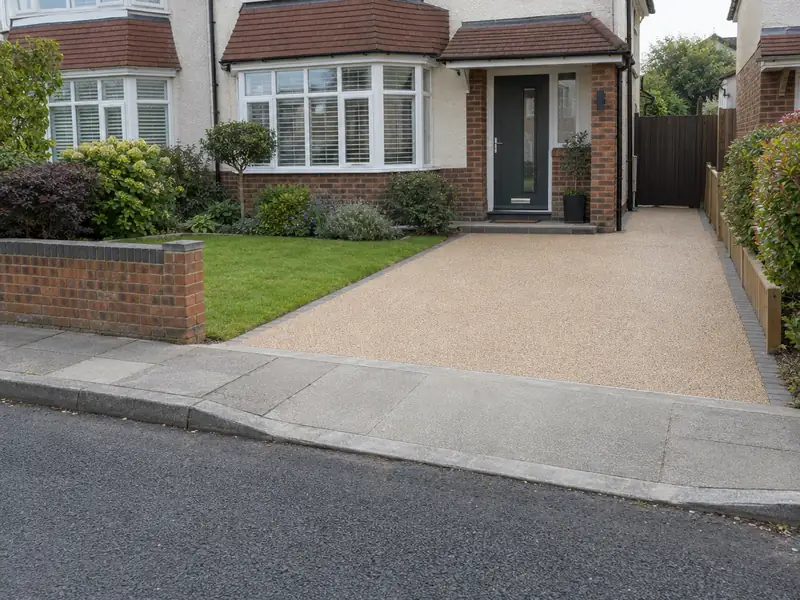
How dropped kerb applications work
Driving over a pavement without a dropped kerb is an offence and can damage pipes and cables under the footway, so a new drive with no crossing should not be used until one is in place.
Highway authorities look at visibility, distance from junctions, trees, lamp posts and the size of the parking space. We measure the drive to the authority's standard, help with the application drawings and photographs, and time the drive so it is ready when the crossing is built.
Is it right for you?
- Your new drive has no vehicle crossing
- You are widening your drive
- You are turning a front garden into parking
How we do it
- Check the highway authority's criteria
- Measure the frontage and parking space
- Prepare plan and photos
- Submit application
- The authority or its approved contractor builds the crossing
- Drive finished to meet the new kerb level
Specification
- Consent from the highway authority (council; DfI Roads in Northern Ireland)
- Works in the footway by the authority or its approved contractor
- Drive levels matched to the new crossing
Pros
- Makes the drive legal to use
- Protects the pavement and services
Things to know
- Approval is not guaranteed
- Lead times depend on the highway authority
Planning and permissions
General information, not legal advice. Pick your nation:
England
A dropped kerb always needs consent from your council as local highway authority, whether or not the driveway itself needs planning permission. A new access onto a classified road can need planning permission as well.
Wales
A dropped kerb always needs consent from your council as local highway authority, whether or not the driveway itself needs planning permission. A new access onto a classified road can need planning permission as well.
Scotland
A dropped kerb always needs consent from your council as roads authority, whether or not the driveway itself needs planning permission. A new access onto a classified road can need planning permission as well.
Northern Ireland
A dropped kerb always needs consent from DfI Roads, whether or not the driveway itself needs planning permission. A new access onto a classified road can need planning permission as well.
Dropped kerb applications: common questions
Can you build my dropped kerb?
Works in the public footway are carried out by the highway authority (the council, or DfI Roads in Northern Ireland) or a contractor it approves. We help with the application and get your drive ready to meet it.
Dropped kerb applications near you
- Aberdeenshire
- Angus and Dundee
- Argyll and Bute
- Ayrshire
- Bedfordshire
- Berkshire
- Bristol
- Buckinghamshire
- Cambridgeshire
- Cheshire
- Clwyd
- Cornwall
- County Antrim
- County Armagh
- County Down
- County Durham
- County Fermanagh
- County Londonderry
- County Tyrone
- Cumbria
- Derbyshire
- Devon
- Dorset
- Dumfries and Galloway
- Dunbartonshire
- Dyfed
- East Riding of Yorkshire
- East Sussex
- Edinburgh
- Essex
- Fife
- Forth Valley
- Glasgow
- Gloucestershire
- Greater London
- Greater Manchester
- Gwent
- Gwynedd
- Hampshire
- Herefordshire
- Hertfordshire
- Highlands and Islands
- Isle of Wight
- Kent
- Lanarkshire
- Lancashire
- Leicestershire
- Lincolnshire
- Lothians
- Merseyside
- Mid Glamorgan
- Moray
- Norfolk
- North Yorkshire
- Northamptonshire
- Northumberland
- Nottinghamshire
- Oxfordshire
- Perth and Kinross
- Powys
- Renfrewshire and Inverclyde
- Rutland
- Scottish Borders
- Shropshire
- Somerset
- South Glamorgan
- South Yorkshire
- Staffordshire
- Suffolk
- Surrey
- Tyne and Wear
- Warwickshire
- West Glamorgan
- West Midlands
- West Sussex
- West Yorkshire
- Wiltshire
- Worcestershire
Related services
Free survey · itemised quote
Get a quote for dropped kerb applications
Free survey, real samples and an itemised written quote.
- Base, edging and drainage priced line by line
- Real blend samples shown in daylight
- Price fixed in writing once the spec is agreed
Prefer to talk? 0800 088 6341 or