Guide
Can you lay resin over tarmac or concrete?
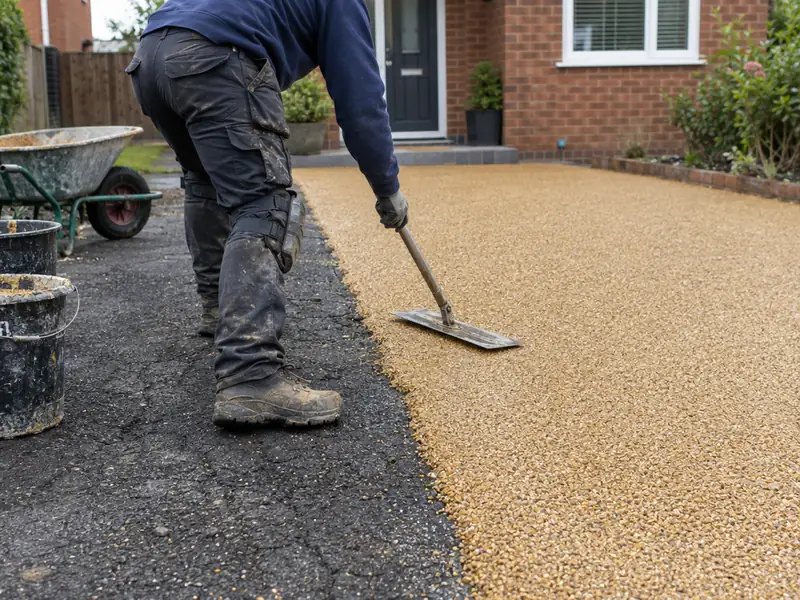
Yes, if the existing surface is sound. Tarmac needs to be fully cured, level and not breaking up; concrete needs to be free of moving cracks and lifting slabs. If either has failed, the faults come straight back through the resin, and the base has to be dug out instead.
What makes a base sound enough?
A sound base is level, firm underfoot, free of potholes and soft spots, and not moving. Hairline cracks in concrete can often be cut out and repaired. Cracks that open and close with the seasons, slabs that rock and areas lifted by tree roots cannot be overlaid.
Tarmac should be at least a few years old, so it has finished curing and no longer softens and moves in hot weather.
What about block paving?
Block paving is not overlaid directly. Each block moves independently, so the joints would crack the resin. The blocks are lifted and replaced with a new base.
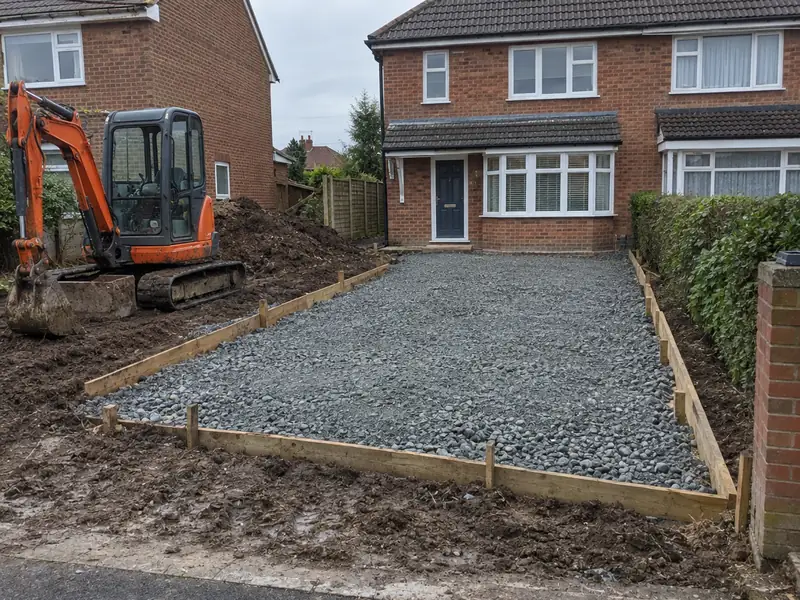
Will the drive get higher?
An overlay adds about 18 mm. The survey checks door thresholds, damp-proof courses and airbricks, and plans edging or cut-backs so the new surface stays below the damp-proof course.
Is an overlay still permeable?
The resin layer is, but old tarmac and concrete are not, so water runs off across the top of the old base. On a front garden in England that water needs to go to a lawn, border or soakaway within your boundary.
General information for UK homeowners, not legal or professional advice for your specific property.