Guide
Resin driveway problems and what causes them
Most resin driveway problems trace back to the base or the day it was laid: cracks follow a moving base, loose stones mean too little resin or a layer laid too thin or in the wet, and yellowing means non-UV-stable resin. Finding the cause comes before any repair.
Why is my resin drive cracking?
Cracks almost always follow movement or a crack in the base: an old concrete joint, a failed tarmac patch, tree roots or soft ground. Patching the resin alone will not stop it returning.
Why are stones coming loose?
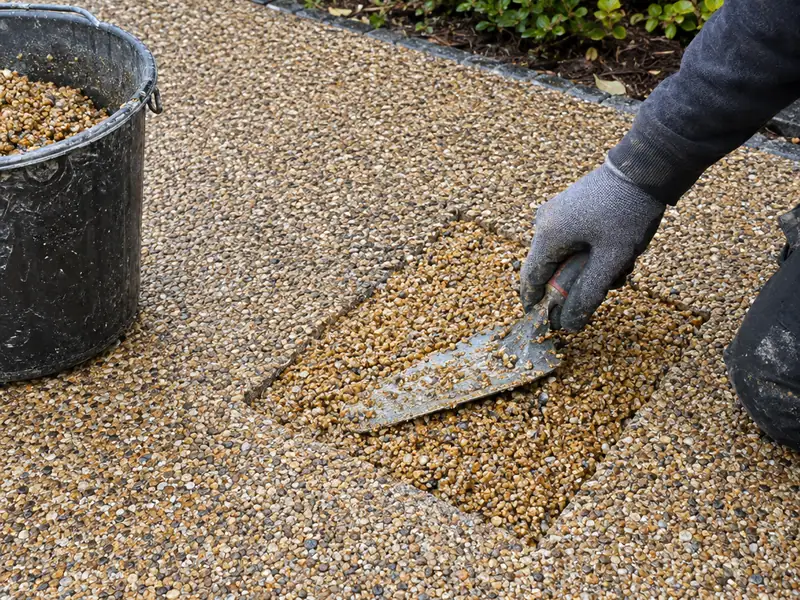
Usually the resin-to-stone ratio was too low, the mix was laid too thin, or it was laid when damp or cold. Small areas can be cut out and relaid; widespread loosening usually means relaying.
Why does water sit on my resin drive?
The resin may be permeable, but the base under it is not, or the pores have clogged with dirt and algae. Cleaning helps clogged pores; a sealed base needs falls or drainage.
General information for UK homeowners, not legal or professional advice for your specific property.