Guide
Resin driveway sub-base explained
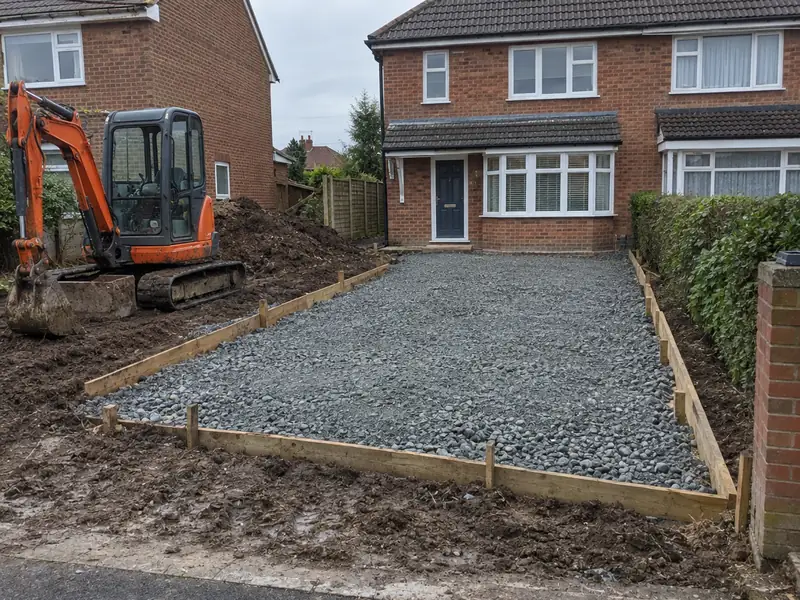
A resin driveway is only as good as the base beneath it. A typical new build has three layers: a compacted crushed-stone sub-base, a binder course of porous asphalt or concrete, and around 18 mm of resin bound on top, all held in by edging.
How deep is the dig-out?
Commonly 150–250 mm for a domestic drive, depending on the ground and the traffic. Soft clay, made ground and old garden soil need more depth than firm, gravelly ground.
What stone goes in the sub-base?
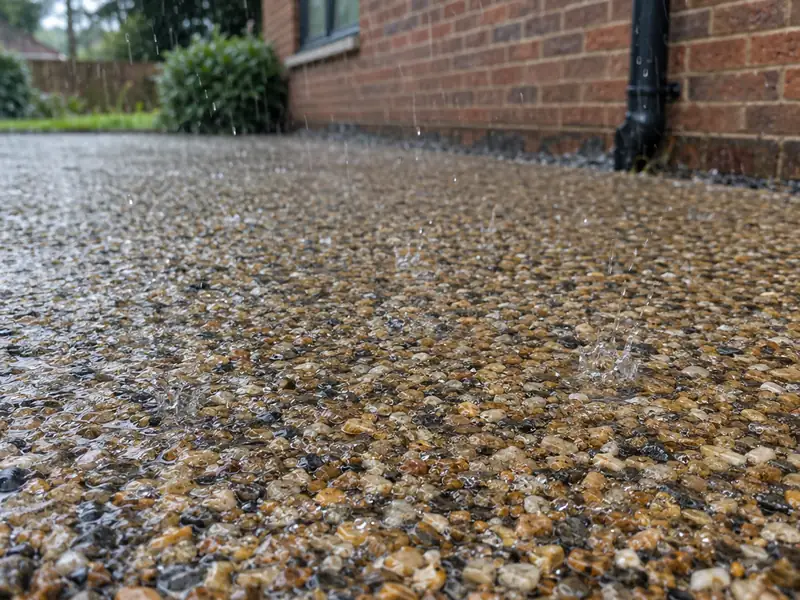
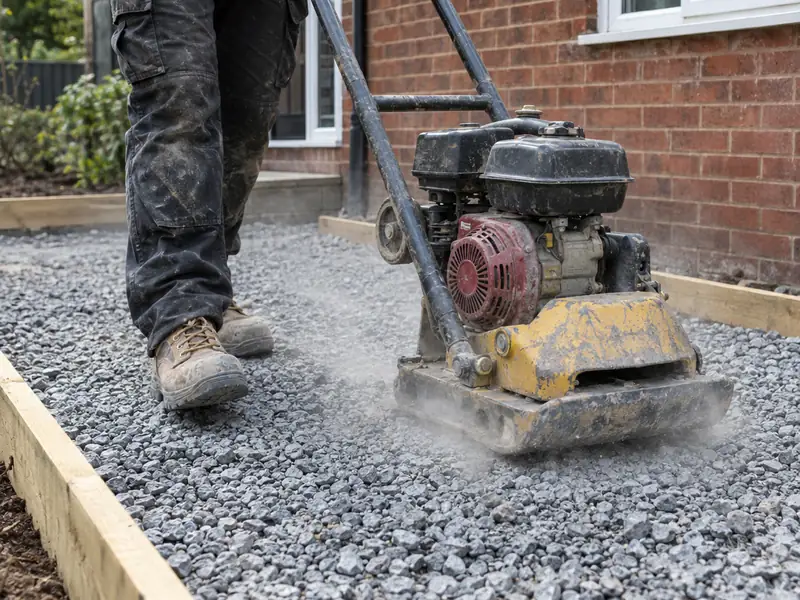
For a sealed build, a well-graded crushed stone such as Type 1 is compacted in layers. For a permeable build, an open-graded stone with no fines is used so water can pass through and be stored in the voids.
Porous asphalt or concrete?
Porous asphalt over an open-graded sub-base gives a fully permeable build and is the usual choice for SuDS-compliant drives. Concrete is strong and suits some sites, but it is not permeable, so drainage has to be designed in, and it has to cure, usually for at least a week and as long as the resin maker's data sheet requires, before resin goes on.
Why does edging matter?
Resin has no strength at an unsupported edge. Setts, block, steel or timber edging bedded in concrete stops the edge crumbling where cars turn.
General information for UK homeowners, not legal or professional advice for your specific property.